Wednesday, November 18, 2009

Shopping at Tokyo

Updated 19 Nov 2009: Shifted the Kyoho Wine Cake to Kawaguchiko and added the chocolate crunch picture
Updated 21 Nov 2009: Updated the Mt Fuji mooncake like thing picture

Just came back from a short trip to Tokyo. I would say its a fruitful and very tiring trip. :) Shopping of course features quite prominently in my itinerary. I was there only for a few days so it is not possible for me to cover everything. However at least for guys, it seems that the impression that I had of Tokyo is the same I had about Hokkaido. Food and more food. You can refer to my other post about eating in Tokyo here. :)

For my first stop at Kawaguchiko station, I bought some rice crackers, chocolate crunch with the Mt Fuji "brand", some mooncake like thing with the Mt Fuji "brand" and wine cake. :) I tried a packet of the sweet rice crackers and they are quite addictive. It was finished in less than 10mins. :p Have not tried the rest yet though. Below are some pictures of what I bought.

Salty rice crackers on the left and sweet ones on the right

Mt Fuji Chocolate crunch packaging

Mt Fuji Chocolate crunch unwrapped

Packaging for the Mt Fuji mini muffin like thing

The Mt Fuji mini muffin like thing unwrapped

Mt Fuji Mini muffin with fillings in the middle

Kyoho Wine Cake packaging

Kyoho Wine Cake unwrapped

The next shopping area that I went was in Harajuku, known as the Takeshita street. Below is a picture of that street.

Harajuku Takeshita Street

For those going there, note that the shopping area does extend all the way across the cross junction to the other side and to the right-hand side. There are some interesting shops at the other end, especially for guys. The most prominent building in Takeshita street is Daiso, the 100 yen shop (excluding tax). There are 3 floors of stuff but don't spend too much time there. There are more interesting stuff around that area. Below is a picture of Daiso, in case you missed it. :) Note that there are different 100 yen shops around and they sometimes sell different stuffs. I bought quite a few interesting things from the different 100 yen shops I've been to.

Harajuku Daiso

I've also been to the Asakusa Kannon Buddhist Temple that surprisingly offers quite a bit of shopping choices. I believe the shopping area is known as "The Nakamise shopping street". They sell a mixture of stuff such as souvenirs, traditional Japanese food and even Kimonos. However, do note that most stalls only open at around 9.30am to 10am. Take your time to shop around. You'll find that you may be able to get stuff cheaper from another stall. :) Below is a picture of the stalls leading to the temple.

The Nakamise shopping street at Asakusa Kannon Temple

I've also been to various shopping areas like Tokyu Hands at Shinjuku, Shimokitazawa (another place for ladies), Sunshine city at Ikebukuro and of course Akihabara. You can refer to my previous post here about Akihabara. I managed to get some cheap stuff in the shops at the back. :) I have also managed to get some pastry recommended by a friend in Ikebukuro, Seibu. It's called Baumkuchen, a kind of layered cake. I got the small pack that is layered with sugar. All I can say is that I think I can finish one box by myself. :) Below are some pictures of the Baumkuchen.

BaumKuchen packaging

Baumkuchen unwrapped

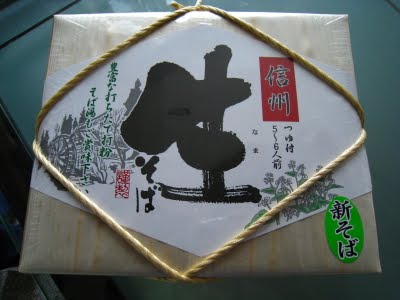
There is also another place where you can do last minute shopping. That is the Narita airport. Previously I was on tour so we did not really have a chance to look around the place. This time though, we spent close to 2 hours within Narita airport (checked-in). There are many shops within the airport and even a mini Akihabara. Not everything there is expensive. The prices for the "food gifts" sold within the airport is actually comparable to the prices you can get outside (most are around 1000yen). You can even get the White Lover Chocolate in the airport. Below are some of my "food treasures". :)

Tokyo Bananas packaging

Tokyo Bananas unwrapped (yum yum)

Uncooked Soba (8 packs)

Even though I'm on a more flexible schedule this time around, it's still a bit of a rush because the trip is rather short and we were trying to squeeze in as many things as possible. Yes... Sometimes 2-3 hours is not enough as the shopping area is really big. Japan is really a shopping haven for ladies. :p

One thing to note though about shopping. Take note of the season in Japan. As it is now approaching winter, most of the stuff on sale are winter clothings, not exactly the kind of clothings you'll wear in Singapore. :)

Visit Rhinestic's Knick Knacks @ Etsy for handmade goods and supplies!

M1 and Starhub iPhone ready for reservation!

I'm not sure when the link was put up but M1 and Starhub iPhone can now be reserved at their respective websites. Still no news about the plans though. Looks like the competition is heating up.

My guess is still the same as before. iPhone should be ready before Christmas. :)

Wednesday, November 11, 2009

Resolve the root cause of the problem

I quote from Henry Ford:

Most people spend more time and energy going around problems than in trying to solve them.


How often do we take the easy way out in resolving a problem instead of resolving the root cause? I would say we do it quite often. The problem lies that in some cases, it's just not worth the effort to resolve the root cause as it would cause a ripple effect that would cause far more impact.

However, the situation sometimes does call for such an action and you might find the solution to be quite simple.

Therefore, one should always find out the root cause of the problem and see if it can be resolved depending on the current situation. If not, keep the solution in view and see if you have the chance to use it.

Tuesday, November 10, 2009

Should Android be open-source?

I think that one of the problems facing open source today is the many variations that you can find that stemmed from a single source. One of the best recent example will be Android.

Android OS, being open-sourced by Google, allows anyone to download the source code and do anything to it, subjected to the open-source licence of course. The problem is that as anyone can modify the source codes to work with any kind of devices, it's perfectly possible for some applications available in the Android store that doesn't work well with all Android phones. After all, you're able to change just about anything within the OS.

I've not taken a look at Android in depth but as I recall from traditional mobile programming, you will need to take note of the phone screen size while coding for applications/games for any mobile device. Android being open-sourced will be able to support just about any screen size of any mobile phone. What if the mobile device has some new chip that provides some unique function? So what does that mean for the developers? How will they optimize their applications/games for the Android phone? In the end, you may have applications/games that only work for specific types of Android phones.

Recently Motorola came out with the Droid, based on the Android OS. Recent reviews have rated it highly but if you look at it from a different perspective, you can see the Android OS being splintered and sooner or later, each mobile carrier will try to take Android and do something completely new to differentiate themselves.

How would this impact the Android AppStore? My guess is that it will be quite big. In fact, I don't really see how Android will allow upgrades of its base OS with this kind of splintering going on. From what I understood from friends, the first version of Android OS cannot be upgraded to the second version. I see the trend continuing.

I guess It's the nature of being open-source.

Wi-Fi Direct to replace Bluetooth?

Seems like right after the 802.11N specifications, the Wi-Fi guys are going for peer-to-peer connectivity. In summary, Wi-Fi direct will turn your device into a mini Wi-Fi access points that will allow the device to connect to one or multiple devices at one go.

Sounds familiar? That's what Bluetooth is doing. The only problem with Bluetooth is that the range is restricted to 10m while Wi-Fi direct suppose to support up to 100m.

Will this Wi-Fi Direct replace Bluetooth? Not likely because I have a feeling that the Wi-Fi chip is much bigger than the Bluetooth chip. For small devices, Bluetooth might still be a much better choice. Moreover, I think Bluetooth uses less energy than Wi-Fi so the battery will last longer. To those devices where battery life is a concern, Bluetooth will be a much better choice.

Will Wi-Fi Direct be of any use? I could only think of it being used in the corporate/student setting. It does aid quite a bit in transferring files between 2 laptops instead of using thumbdrives or portable harddisks. It may also be good for streaming applications like audios and videos. Of course we cannot forget about LAN gaming. This specification may make a lot of multiplayer gamers quite happy. That's all I can think of off my head. :)

Surprisingly, the Wi-Fi Direct specifications will be ready by 2010. That's fast considering how long it took for 802.11N to be ready. Wait and see if they can keep that promise. :)

Monday, November 9, 2009

Cloud Computing: A base where your services can grow

Many people have tried to explain what cloud computing is but recently I've read something which I believe best describes cloud computing. The gist is that it enables an organisation to have a base where your services can grow.

To me this is really the true advantage of cloud computing. Just imagine that you have an application built on top of a cloud computing compliant platform. You deploy this application into the cloud. Whenever your application needs more juice, just increase the "servers" and that's it. The application will automatically find these new "servers" and scale accordingly, or the cloud can be configured in such a way that it automatically find these new servers and scale up accordingly when the demand goes up.

A dream? Not really. J2EE clustering architecture has been doing the manual variation of this for some time. Just deploy the J2EE application into the cluster and that's it. The new application instance will try to find the other instance and will start sharing the load. I'm not that familiar with the database architecture but I believe it should also be workable theoretically.

Anyway this new way of programming will take the worrying of the infrastructure portion away from the application developers. They can then further concentrate on developing the application. No more wondering about how many servers, clusters, load balancers and what have you. Application is slowing down under the load? The organisation can just active the extra servers and your application response problem is resolved, all without any intervention from your vendors.

I wonder if organisations can recognise this unique advantage which the cloud can offer. The only thing that you need to worry about is the services that the organisation provides. That's what matters most.

Visit Rhinestic's Knick Knacks @ Etsy for handmade goods and supplies!

Starhub is finally selling the iPhone

About a month after I written this post, the last telco in Singapore, Starhub, has finally jumped on the iPhone bandwagon.

Why the telcos' delay in selling the iPhone? I only believe that there is only one reason why they delayed getting the iPhone. They did not believe that the iPhone will be the "killer app" for the 3G network.

In fact, the main reason why M1 and Starhub is on the bandwagon should be because they have noticed the trend that almost everyone is trying to get their hands on the iPhone, even the little ones and their bottom lines started to hurt.

That's the key point. Their bottom line. That's the only reason I could think of why they waited 1 year and a half to introduce the iPhone. I'm not sure about them but if I know some people actually went all the way to the United States to get their hands on the first generation iPhone, something must be cooking.

Both will most probably come out with the plans before Christmas if they want to catch the crowd. How the plans will turn out? I believe M1 being the more innovative telco (at least previously before the CEO went to Starhub) will come out with the plans that will be a little different from Singtel. Starhub will just keep their plans flexible and compare both M1 and Singtel's plan before deciding. With the new CEO at their helm though, things might change for Starhub.

If the telcos' want to wrestle back the users who switched to Singtel, they should seriously consider offering unlimited broadband and supplementing their income by... ... the AppStore of course. However, I don't think any of the telcos' have the guts to do that. :)

Well, we'll know in a month's time.

Saturday, November 7, 2009

Nuclear war, Global Warming and Windows

I quote from Dave Barry:

If you asked me to name the three scariest threats facing the human race, I would give the same answer that most people would:nuclear war, global warming and Windows.


:D

Economics of Telco's Plans

I think that it is good for everyone to have some basics in economics. It would enable people to understand why things are done in a certain way. Recently I read about some comments on the Telco's billing price. The commenter stated that the free gifts should be done away with and that the consumers rather have shorter contract period and lesser monthly payments.

So what's wrong with this comment? The commenter forgotten a few points.
  1. The brand new hand phone they get when the contract is renewed is at a subsidized rate because you have signed a 24 months contract with the telco.
  2. If you're a low usage user, you can always go for the pre-paid card route.
  3. The reason why the monthly bills can be lower is because you have signed a long contract. The shorter the contract, the higher price any business will charge you. Why? Because they have no assurance that you will continue to purchase goods or services from them.

So how to have a shorter contract period? That is very simple. Do not get your new hand phone at a subsidized rate. You will then have the freedom to change your contract any time you want.

How to achieve lesser monthly payments? Go the pre-paid way. You have total control over how much you want to pay and you will only need to top-up the pre-paid card every 6 months (I know M1 has this rule) if you wish to keep the number. Each pre-paid card is only like $18.

Look and observe your surroundings once in a while. If even construction workers and maids can afford to have hand phones, don't you think that you may have missed out on something?
Related Posts Plugin for WordPress, Blogger...